The FeiThink Library · Standalone
How to Stay Relaxed
5 min
Machine translation from the Chinese original, not reviewed by the author.
Recently a friend said they like the way I am when I am relaxed:
not aggressive, no halo, and that is quite good.
I like it too.
I like that state of being completely relaxed in someone’s company.
I know I have always been a sensitive person, perpetually wound tight.
There is a book called Mingan shi yizhong tianfu (Sensitivity Is a Gift).
Whether it is a gift I do not know; in any case it certainly has its good and bad sides.
I asked what it takes to stay relaxed.
The friend said: stay away from people who easily set off tension; you cannot be in contact with them and remain unaffected.
I kept wondering whether there was another way:
could one, by strengthening one’s own cultivation, rise above circumstance and attain a relaxed state?
For I must carry through the principle of thinking aloud, Think Aloud.
An open mind cannot stay sealed off forever, always burying views and voices in the heart, always keeping a low profile and keeping silent.
One: Designing the Environment
I recall the principle in Atomic Habits: human behavior is a product of environment.
If I do not change the environment and only strengthen my own cultivation, I am trying in vain to use personal will against the environment.
This is laborious and thankless, a waste of one’s mental resources. Good steel should be used on the edge of the blade.
The only occasion for personal will to play a role should be the finishing blow at the critical moment, not daily head-on confrontation.
If one truly likes the way one is when relaxed, the first thing is:
to design and remake for oneself a comfortable environment, reducing all sorts of cues and prompts that make one angry or tense.
Clean up the friends list: block anyone at the slightest disagreement;
give up the no-cut-ties stance and cut down the pink maggots;
if someone is an eyesore, just kick them out and be done with it;
keep distance from the passive-aggressive and ill-intentioned, and from those whose values differ sharply and who are domineering.
What good are the teeming masses to me?
What meaning or efficiency is there in asking passersby for the way?
If you like researching things, go to universities, places where smart people cluster, to exchange and delve (domestic ones forget it, those are places where servile dogs cluster);
if you want to earn some pocket money, cooperate and exchange with people who have brains and resources;
even if you want to change the world, it is with like-minded talents and outstanding figures that you join hands.
Read enough history and you discover:
the masses are neither the makers of history nor clear-eyed.
Most of the time they are merely irrelevant onlookers.
Treating people equally is high-sounding fine words, with almost no operability in practice.
If we gave equal weight to everyone’s thoughts and opinions, we might as well stop doing anything.
The principle to hold is to treat others according to what they deserve. Those who should be seen as zero should be seen as zero.
Labels and stereotypes are tools we cannot do without. A person’s behavior departing from their initial label and stereotype is a manifestation of free will and character.
The greatest equality we can achieve is to give all people and groups the same presumption and basic respect.
After that the principle to follow is tit for tat (Tic for Tac).
Two: Concealing One’s Form
Contract one’s core values and identity.
Abandon peripheral minutiae.
Abandon all personas and halos, throw off every burden.
When not asked, never again say I am from Tsinghua.
I used to take pride in being from Tsinghua. But after seeing too many red engineers / human tools who cannot tell right from wrong, I now doubt this identification.
I now despise a motto with no direction like ‘Self-discipline and Social Commitment.’
What I now identify with is ‘independent spirit and free thought.’
A friend told me:
the greatest constraint on the development of human progress is the inability to achieve genuine collaboration.
I agree completely.
But as to how to achieve genuine collaboration, I absolutely cannot accept totalitarianism / statism, that entity which rapes individual will.
The foundation of collaboration is inviolable free will, the spirit of contract and the spirit of trust.
No longer boast that my IQ is 150, no longer put on haloed personas as top student | INTJ | independent thinker.
There is no need.
The books you have read, the roads you have walked, the things you have thought are all written on your face, reflected in your aura, learning, and manner of speech.
People who cannot read it are not people we associate with either.
Assert existence only through thought and logic.
Three: Independent Character
After I published my notes on choosing a partner last time, someone cursed me out: who do you think you are, picking concubines?
That’s right, selecting a consort: choosing from thousands upon thousands the one who is one’s only one.
Actually, when people say ‘selecting concubines,’ the implication is that only an emperor is qualified; what right does a commoner like you have to pick and choose?
I do not think I am especially outstanding. I have merely freed my thought and come to see some things differently.
I no longer habitually look up to others as I did in the past; I am learning to level my gaze.
Are princes and nobles born of noble blood?
If a chicken feather rides the wind into the sky, is it no longer a chicken feather?
I no longer feel I am unworthy of anyone.
Even if I am penniless, I can regard myself as an aristocrat of knowledge;
even if I am bounded in a nutshell, I can count myself a king of infinite space.
On the way back to China, I sighed inwardly: Chinese people really do live like ants.
Dignity is truly too luxurious a thing for ordinary Chinese people.
I admit I lack the ability to change the ways of the world or change other people; all I can do is guard my own little plot.
Stay farther away from those who always want to change you, and be with those who truly appreciate and accept you.
Four: Learning to Love
Finally, one must still learn the capacity to love.
Repaying resentment with uprightness I can do well enough; repaying kindness is where I always fail.
Love is an art, requiring constant cultivation.
Listen to other people’s wishes and inner voices, understand their efforts and hidden hardships.
Do not judge heroes by success or failure; know the bond formed in hardship.
The FeiThink Library · Standalone
Next: Waking Up to a Limit-UpIf this stayed with you, write to me
The FeiThink Library
First published 2020.04.03
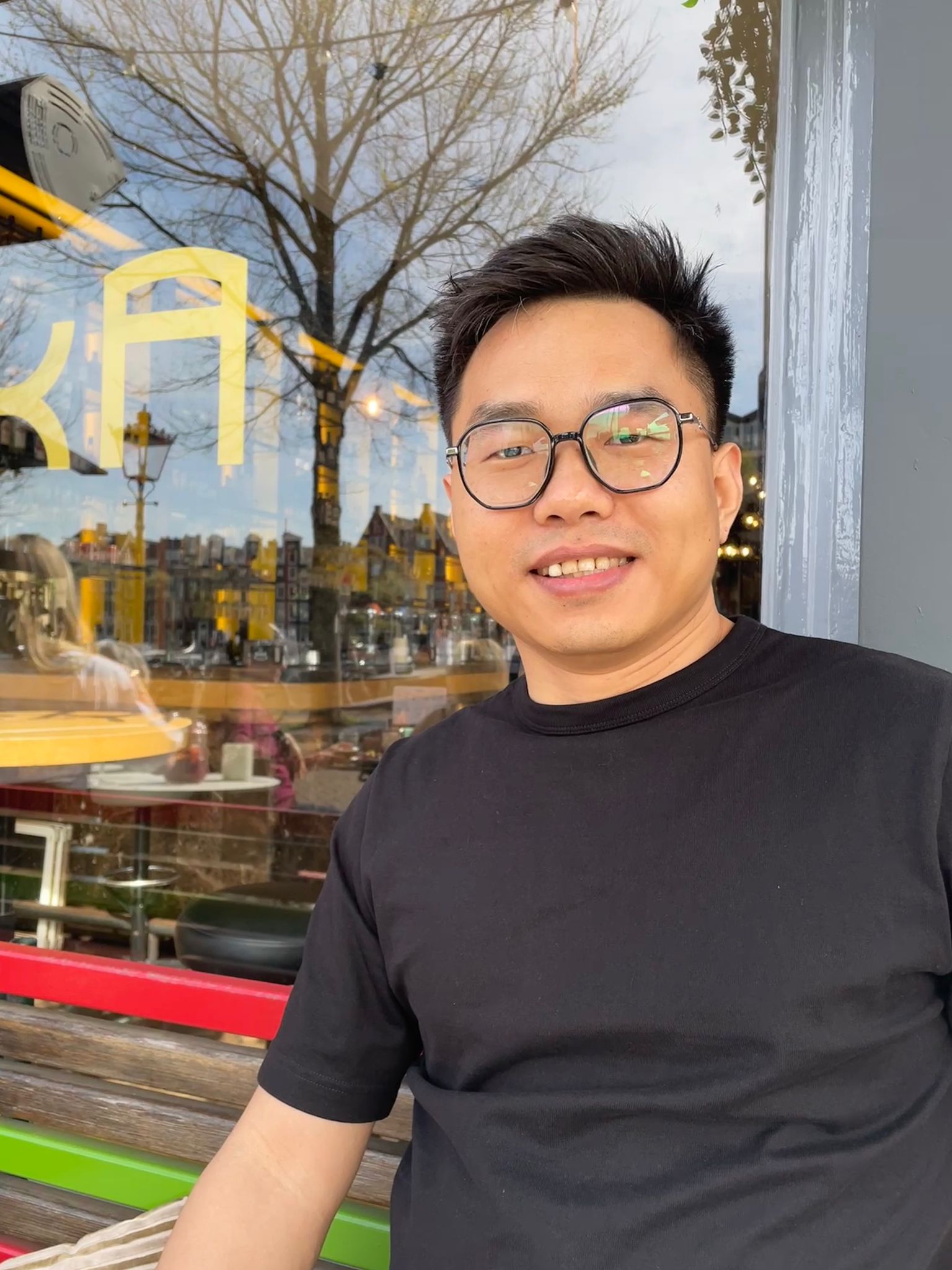 Fei Huang · Writes from Amsterdam on Kant, Dostoevsky, and the moral life.